The Story of Feliciana
Feliciana Mutakyahwa is the person who made this foundation happen. She initiated this project, because sometimes even small gestures can change a person’s whole life. Her childhood passed in challenging conditions, and today, when she sees people who do not have access to basic human needs, she tries to change it. But we all understand that it will take more than one person to provide all villages and cities with the infrastructure necessary for everyday human life. People live there right now, sometimes without water and electricity, and we have all the means to help.
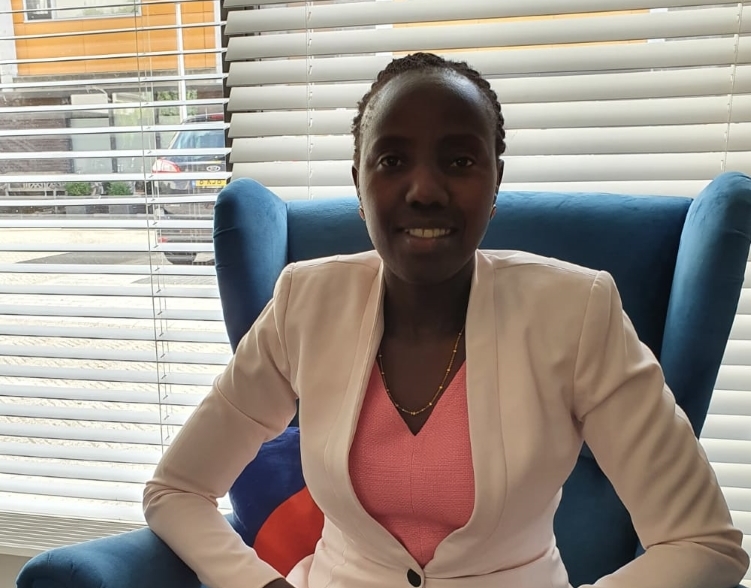
Feliciana was born into a family of three children. She was the firstborn. It is difficult to interpret the idea of a poor or rich family in Tanzania to European people. It was not a poor family because they did not starve. But it was not a middle class family either, because if you talk about the middle class, the least you can expect is that they have all the basic human needs, like, for example, you have well-built house with electricity. Her family did not have it. Her parents were farmers. Not big farmers, they cultivated two to three hectares.
“And I am thankful that my father was an educated person because education also plays a very big role in families and society”. When Feliciana’s father was young, he went to study in a missionary school. A Catholic school, so it was a particularly good school. He had a good education, which is comparable to a high school in the Netherlands. On the contrary, her mother never went to school, but she was raised with good morals. She taught children things about humanity, such as to live and care for one another and know what is good and bad. “The two of them gave me what I needed. They made my family complete. My mother did not go to school, but she has other techniques and morals that my father maybe also knew, but not as much, because she lived in a village”.
Education was especially important to her father. He insisted his children go to school. And the income they had was enough only to cover the necessary things. But they never had electricity or luxury food. She grew up eating local foods. For breakfast, they ate sweet potatoes. They had warm local food for lunch and dinner. They did not cook in oil because it was very expensive. This kind of food was only available on big holidays. They just boiled their food. They kept chickens and could sometimes eat their meat. Her younger sister loved to fish, and they could sometimes diversify their bean meal with fish. Children got some sweets or sodas only on holidays, for example on Christmas. Also, they got some new clothes and some money to go and buy candies. So, you can imagine how difficult it was, even though they were not a poor family. A lot of people lived even worse. The families’ men took all the money after harvesting and went to the club to spend it all. But Feliciana’s father was a focused person, and therefore he was able to provide the wealth necessary to send his children to school.
Feliciana also loved school like her father, and he made sure that she got all the things she needed. As a result, she went to primary school. Pupils sat at a desk with seven other kids. They were squeezing each other all summer, sometimes even sitting on the floor. Yes. They were sitting on the ground. To start lessons, they first had to do the cleaning there. The children got up at 6 in the morning, went to school, cleaned classrooms and toilets there because no one could do this work for them. And only after that, they sat down to study. After lessons, they usually went outside and did things there, such as building toilets and fetching water. They also had a farm in the school, where they also grew rice, for example, and they had to do everything themselves to grow and harvest. Feliciana recalls that it was a pleasant time after the harvest they grew with their own hands. They grew maize, fruits, and they had orange trees around their school. Also, they played football and other activities and games. Let me remind you that there was no electricity and somehow it was necessary to study. But she really loved it and was able to finish primary and secondary school.
The children who studied with Feliciana were of different ages because they were sent to school when the parents could afford it. This wasn’t very often due to the poverty. A lot of the times, the girls became pregnant at some point, because when they had nothing to do, they met some irresponsible man and ruined their lives. They were forced to give up education, give birth, and raise children, remaining in poverty and despair. Sometimes businessmen who came to buy rice did it to them. It was a terrible time when parents of these girls in poverty were happy with any money that they could buy food with. These businessmen would pay off the parents by giving them 100 euros, avoiding prison, and leaving afterwards. Feliciana’s dream was to reach far. She did not know where, but she just wanted to achieve something big. She wanted to go to university someday. So, she knew she had to work hard.
She remembers once when it was raining heavily, one side of the house broke down. That was the kind of place she lived in with her family. “It was a lot of experience, but I am so grateful for all of this because it has given me so much. I have learned so much through these hardships, about how life can be“. Of course, they did not have a shower, just a bucket of water. They did their laundry in the river; they did not have a washing machine. They used firewood to replace some of the functions of electricity. Feliciana’s family lived near the mountains, which are now a touristic place. They used to go to these mountains to fetch firewood. Can you imagine a child fetching firewood from the hills? She was about seven to eight years old. Yes, that kind of work was done by children as well, because their parents were usually busy at the farm. The fact that Feliciana went to school did not mean that she didn’t do household chores and help on the farm.
On Saturdays, everybody had a small piece of land that they had to work on. From six in the morning to ten at night, they would work on this land. You go home when the sun comes down. But in all fairness, it was not the most deserted place on earth. They had a dispensary. People could get medical help. They also did not need to go to other villages to fetch water. The school was also nearby. This all together made their life bearable. In other places, which are really cut off from civilization, there is no water, no electricity, no dispensary, and no school. And this is to this day, in some places, children have to travel long distances to go to school, like one hour to school, one hour back. They walk in the dark at five in the morning, without roads, without light, little children going to school. It is not safe at all. But there is no other way out. To be left without education is even worse. So, they risk every day walking in the dark amongst wild animals to go to school so that tomorrow they will have a chance for a better life.
After Feliciana graduated from secondary school, she did not pass her exams with a good enough grade to continue her studies, and she was recommended to continue as a teacher. But she wanted to continue her education. Her father was able to find an evening school for adults in another village. She settled in with a family and had to work for them there, doing physical labour like cleaning, washing the laundry and cooking. She was only 16 years old at that time. There was no water in this village and she had to walk to the neighbouring village which was located 3 kilometres away. Every day, Feliciana had to fill a 20-liter bucket of water. Every morning, she woke up at 5 am and went many times there and back to get water to drink and use for household purposes. But she did not use this water for laundry. She went to the river to do that. Within the family, where she lived, children did not appreciate her efforts and often used the water brought by her for something that could be done by going to the river. After filling a water tank, she did household chores and went to school. The moment she reached the class, her shirt was sweaty and dumpy, but she had to sit there and listen.
She did it every day for two years. After finishing, with her results, she could go to any college. But to study further in college, money was needed, and the family did not have it. But good people were found and helped Feliciana. They paid for her college tuition. However, when she was in the second year of college, her parents died. After that, Feliciana found a good job. She always loved modelling. She loved the catwalk. So, she joined a modelling company and started to work in the evenings. Afterwards, she found a job in customer service at a bank. However, getting a job like this doesn’t happen there as it does here. You don’t just send a CV. You need to know a guy, who knows a guy, who knows a guy. Often one has to sleep with this person to get a job, or in Feliciana’s case, tearfully beg the person to accept her, because she needs to help her sick sister.
It was a difficult time for Feliciana. She had to save her sister. Her parents were no longer there to help. Kind people helped as best they could. But at that time, she could only afford bread. She bought a loaf and divided it into two to eat for tomorrow as well. Thanks to her work in a good position at a bank, she could take care of her sister. Luckily, her sister survived. This difficult path of becoming with various adversities tempered the character of Feliciana.
“As a woman of faith, I know that if God is there, He will take care of me. And I think it is because of Him. Can you imagine the trauma I went through? But I never even think about quitting my studies. I say, no, I will continue no matter what. I will continue”.
And she managed it. Though when she met her husband, he mentioned she was very skinny, almost anorexic. “I had to be this thin so that I could save a life“. In Ikwambe and many other villages, there is neither water nor a dispensary. To receive medical care, one has to get to the dispenser by bicycle for one hour. To bring water, you need to send children five kilometres to and back. And this water is not enough for everything. Sometimes people have to collect water in buckets from ditches to drink. Can you imagine what kind of diseases there are in this water? People cannot be healthy when they drink such water. And to boil it, they need to go out for firewood. However, when someone is sick and they can’t walk, how are they supposed to get this firewood and water? “Sometimes I say, you know, these people, they’re just living by the miracle of God!” exclaims Feliciana.
Thanks to the government, a minimum age at which a girl can get married was introduced. This rule is strictly followed. Thirty years in jail is what you get when breaking this rule. Therefore, more schoolgirls can complete their studies and get an education before getting married. There are also people in Africa who are very rich, and they live a luxurious life, and most of them send their children to study abroad.
Feliciana met her husband and moved to the Netherlands. She remembers what she went through. That is why she is trying to help and change people’s lives. She wants to ensure they have at least the basic needs: water, electricity, food. Start small. This water project was her idea, and she got the consultancy of a hydrologist. And he established that there is water approximately 140-180 meters deep. He suggested installing a solar pump. The estimated cost is 27 500 euro. Now, after finding more willing people, we together can help and collect money to make it happen.
Many projects like this fail because people do not have enough responsibility for what they’ve been given. In this project, Feliciana controls this process. She knows the people in this village. She wants to teach them everything she can. Education is the most important. It is especially important to keep the children who went to fetch water busy. After the installation of a solar pump, they will have a lot of free time.
“The resources are badly managed. Everybody has a right to have clean water. We have rivers. We have lakes. Can you imagine? And yet, people still don’t have water”.
But then there are still people who are lacking those basic needs. That is why she wants to give back. Good people helped Feliciana get to where she is now. They pitied her. When she lived in Zanzibar with her husband, she met a girl who asked for help. She wanted to be a tailor and needed to go to college. This girl has a similar story as Feliciana. She helped this girl and let her live with them for a while. So, this girl found a school nearby, and they paid the tuition for her. “Do you think it was a lot of money for a year’s tuition? It was like one hundred euros. Can you imagine, a hundred euros could change someone’s life so drastically?”. Feliciana knew a designer who was very interested in the young girl’s embroidery. The designer said that she really liked the young girl’s talent and that maybe she could use it in her design. “And she actually got employed by the time I left, she got employed” Feliciana said.
If you teach a woman some skill that can give her food, this is a huge step towards change. When the water pump is installed, all these children will have more time to study, so books that people here are just willing to give to someone can be sent to these kids. They will be handy there because education can change the living conditions of the people who live there. People have a lot of books to throw away. We want to collect these books. If we say we are sending these as a donation, not for business, it will go very smoothly. And these kids will have a library where they will learn.
“But you see, my foundation, the charity I did way before my foundation, I find it so important, because my father saw the importance of education, educating one girl. In my dream, we not only achieve this water project, but also at the very least, I educate one girl or let her go to a college to take a simple course like tailoring or cooking, every year. I don’t know what they will learn, but they will learn something, so that they can be themselves”.